
FOR WHOM THE BELL TOLLS - P 20
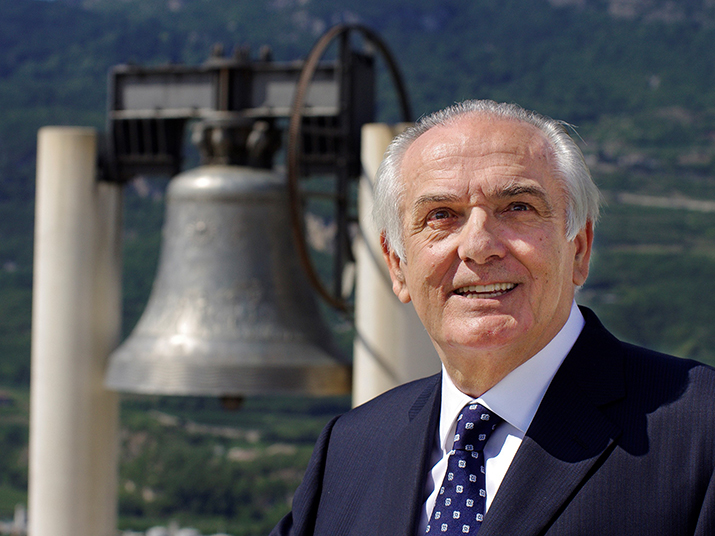
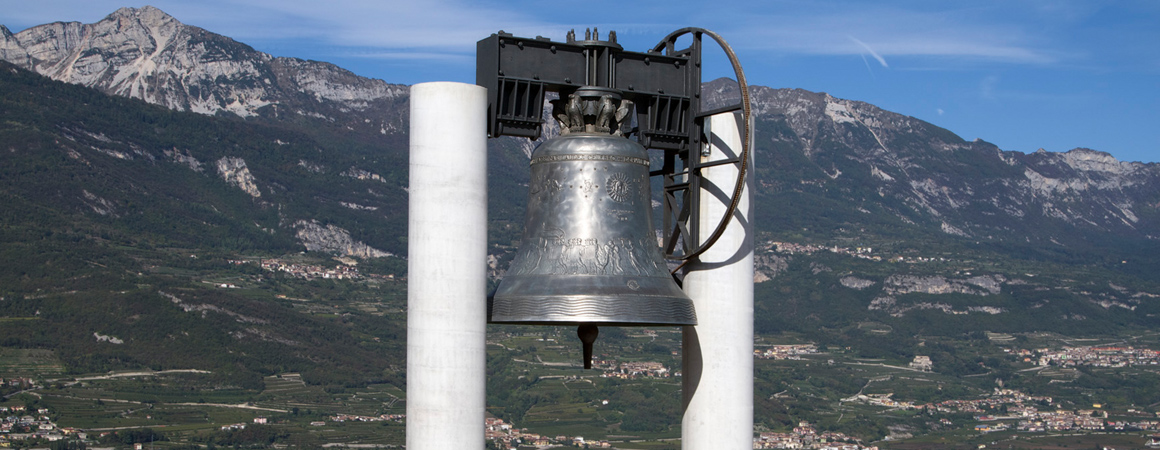
With the passing of Alberto Robol in 2024, Rovereto lost, not only the president of the Fondazione Opera Campana dei Caduti from 2003 to 2020, but a man of letters, a thinker, a profound interpreter of the spirit that animates Maria Dolens. In his vision, the Bell was not an object, but a living entity that accompanies history and interprets its changes. Following in the footsteps of Don Rossaro, Father Iori, and Monti, Robol recognised the decisive turning point in 1965, the year in which Paul VI blessed it in St. Peter’s Square, redefining its meaning from a symbol of the fallen to a vigilant conscience of Humanity. 'The veneration of the dead,’ he explained, ‘becomes a warning to the living, a stimulus to hope’.
For him, the Bell represented a cultural revolution: it was made from the bronze of the cannons of victors and vanquished, an unprecedented gesture that transformed the memory of war into a universal embrace. “The Bell speaks to Humanity itself” he said, with the passion of a philosopher. As a man of letters, Robol knew that symbols endure thanks to words and interpretations, and he wanted Maria Dolens to become the "conscience of the world", a place where Peace was not mere rhetoric, but a lasting education of the spirit.
Under his presidency, the Foundation embraced an international outlook, hosting the flags of more than eighty nations and dreaming of displaying them all. His project was clear: to transform the Miravalle Pass into a citadel of Peace, a meeting point for cultures and religions, a sort of 'universal altar' where every faith could find space.
There, he said, 'sky and vegetation meet', and nature and Man are reconciled.
For Robol, the Bell was not Rovereto's, but the world's, for him the city was its spiritual guardian, not its owner. That is why he invited associations, schools, and citizens to recognize the evening toll of Maria Dolens as a call to civic awareness. Through the Youth Congress, an educational initiative for students, he shaped a genuine pedagogy of Peace—a means of nurturing new generations in the awareness that dialogue is “a personal commitment, not a mere aspiration”.
His literary reflection shines through in every word. Like Manzoni, Robol believed that history is an immense present, in which the past and the future are embedded. The Bell, in its vision, is just that: a resounding, everyday judgement on Humanity, which 'remembers the fallen of all wars, even the unknown ones', while at the same time inviting the living to assume responsibility. And to do this he did not hesitate to use art. In the early 2000s, the Potlach Theatre launched a series of performances of Invisible Cities that, even in the centenary year, “re-read” the city of Rovereto through the values embodied by Maria Dolens. At the same time, he inaugurated the 'Strumenti di Pace' International Composition Competition, which in its three editions brought internationally renowned performers, including the unforgettable Ennio Morricone, to Colle di Miravalle.
All his initiatives seem to form part of an overall design. Convinced that Peace is the highest form of justice, also on a political level, Robol worked for Maria Dolens to establish a dialogue with the major international institutions, from the Council of Europe to the UN. This is also why banners of countries in conflict fly side by side on the Viale delle Bandiere: an image that sums up his dream of universal brotherhood.