
The People’s Republic of China (PRC) has recently been at the centre of two events that, thanks in part to extensive media coverage, have once again drawn the attention of global leaders and public opinion to the “Asian dragon,” the world’s second-largest country in terms of population and economic power.
In chronological order, at the end of August, the annual summit of the Shanghai Cooperation Organisation (SCO), established in 2001 through a joint initiative by China, the Russian Federation, and four Central Asian countries, was held in the city of Tianjin .
Originally a purely regional entity, it has now 'risen' to become a fully-fledged multilateral entity, with some 30 participants, including full members (with India, Iran and Pakistan among the new entries) and observers, almost all of whom were represented at the highest level at this important Chinese event.
As is well known, “Murphy’s Law” is that rather annoying, unwritten rule according to which a person, already experiencing a difficult phase of life, is suddenly confronted by additional unforeseen and unforeseeable negative factors that further darken a situation already marked by more shadows than light.
Applying this perspective to France, the comparison fits perfectly. The country is grappling with a serious institutional impasse, with a President who has become largely weakened and even discredited. Yet he persists in proposing an unlikely remedy to a deep political crisis—one that is, on the one hand, systemic, and on the other, largely attributable to his own actions-, particularly in the revolving door of “disposable” prime ministers, five of whom have served in the past three years.
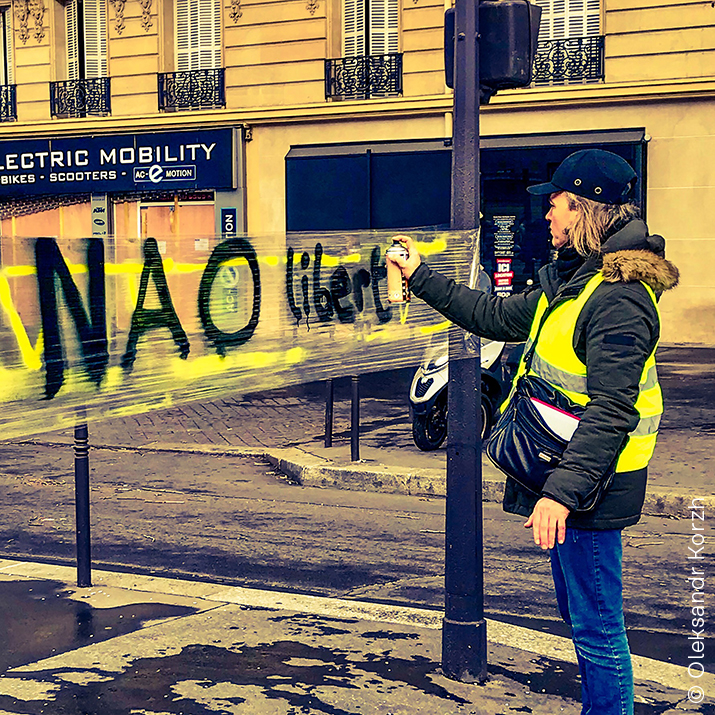
On top of this, there is a less than brilliant economic situation (industrial production has long been in decline) and a constant threat of social conflicts (think of the chaotic demonstrations of the gilets jaunes not long ago) ready to explode in the event of unpopular measures.
It is hardly a coincidence that, to avoid a massive resurgence of hostile crowds, President Macron was forced to withdraw one of the laws he had most personally championed: that which would have increased the age of retirement.”
And let us turn to the concrete manifestations of ‘Murphy’s Law’ in France which are few in number (essentially two), but which have an extraordinary impact on the country’s image, both at home and abroad.
The first took place on the morning of 19 October (a Sunday), when four perpetrators, equipped with less than sophisticated technical means (a van with a hoist ladder; glass-cutting tools; two getaway scooters) as well as a significant amount of cold blood, broke into the country's most important museum, the Louvre, in broad daylight, removing nine priceless Napoleonic jewels from the so-called Apollo Gallery. The estimated value of the stolen goods, set at €88 million, is actually lower than their “original” value, considering that the most valuable item—the famous Empress Eugenie’s crown—was later found in a public street, only slightly dented, due to an incredible oversight on the part of the thieves.
The investigations - which led to the arrest of two convicted criminals about to leave the country - revealed, to the dismay of national public opinion, a number of decidedly surprising factors: the jewellery was uninsured, and the perimeter alarm only went off after the thieves had entered the museum and nearly got away with the heist. For an institution that welcomes 9 million visitors annually, such precautions—though certainly costly—would seem essential. Yet, once their absence was revealed, the French can now only watch helplessly as the usual blame game plays out.
The second episode, on 21 October, involved the transfer of Nicolas Sarkozy, President of the French Republic from 2007 to 2012, to the Santé prison in Paris. The judiciary had already launched a couple of investigations against him in the past (in particular for illegal telephone tapping), which ended with minor convictions.
The gravity of the charges against him, with the most recent brought by the Court of Paris, sentenced him to 5 years in prison with additional penalties of ineligibility and loss of civil rights, for criminal conspiracy—the only charge retained after bribery and embezzlement allegations, which could have led to a harsher sentence, were dismissed. The crime is linked to his (victorious) election campaign in 2007, where his opponent was the socialist Royal. At that time, two of his close associates approached the then Libyan president, Muammar Gaddafi, to solicit funding from him in exchange for unspecified 'political support' from Paris. In fact, the judges were unable to establish whether the funds actually reached the campaign coffers, or whether Sarkozy himself had taken any action to obtain this illicit contribution. In short, the magistrates found him guilty and convicted him on the basis that he could not have been unaware of his collaborators’ illegal actions, and instead that he knew of and did nothing to prevent them.
By an ironic twist of fate, Sarkozy’s imprisonment after a single level of judgment stems from a 2020 law, backed by the Gaullist group, designed to punish offenders more harshly by denying them the right to await appeal as free men and women. Since, in his case, the second trial is set for March 2026, Sarkozy was supposed to spend at least five months in prison. However, the judges granted his lawyers’ request and that of the public prosecutor's office, which had called for the release of the former president. Sarkozy then left the prison after serving only 20 days behind bars, remaining under judicial supervision.
Whatever the outcome, this is undeniably a jamais vu situation in post–World War II European politics, set to deeply affect France’s image and the collective consciousness of its citizens.
In conclusion, it seems appropriate to make a few remarks on the broader situation in the “Hexagon”. The prolonged political crisis discussed at the outset of this editorial stems from the severe defeat of pro-government parties in the June 2024 European elections, a situation further exacerbated a few weeks later by President Macron’s abrupt decision to dissolve the Chambers and call new legislative elections. Contrary to the Élysée’s expectations, the elections failed to deliver a majority to govern, despite the benefits of a presidential democratic system, largely because of the substantial advances made by left-wing and far-right parties.
In addition to the concerns of the financial markets, anxious about further domestic uncertainty and growing social tensions, such concerns also extend to European politics, where France has long been an indispensable pillar—a role underscored even more since Brexit in January 2020, as the EU’s only nuclear-armed nation.
Nonetheless, it is in the field of foreign policy that President Macron, (whose mandate runs until spring 2027), can claim notable accomplishments. In the Israeli-Palestinian conflict, he was, in fact, the driving force behind the recent round of pro-Palestinian statehood recognitions recorded in New York at the General Assembly. In the Russian-Ukrainian conflict, he was the co-founder—together with Britain’s Starmer—and an active member of the “Coalition of the Willing,” a group of some thirty Western countries committed to providing long-term security guarantees for Kiev, while also supplying the necessary financial support to its authorities.
In conclusion, a weakened France is ultimately in no European country’s interest, and least of all Italy’s, which, despite occasional bilateral misunderstandings, regards its ‘Latin sister’ as a valuable and generally reliable partner for advancing common goals and shared priorities on the continent.
Reggente Marco Marsilli, Foundation President